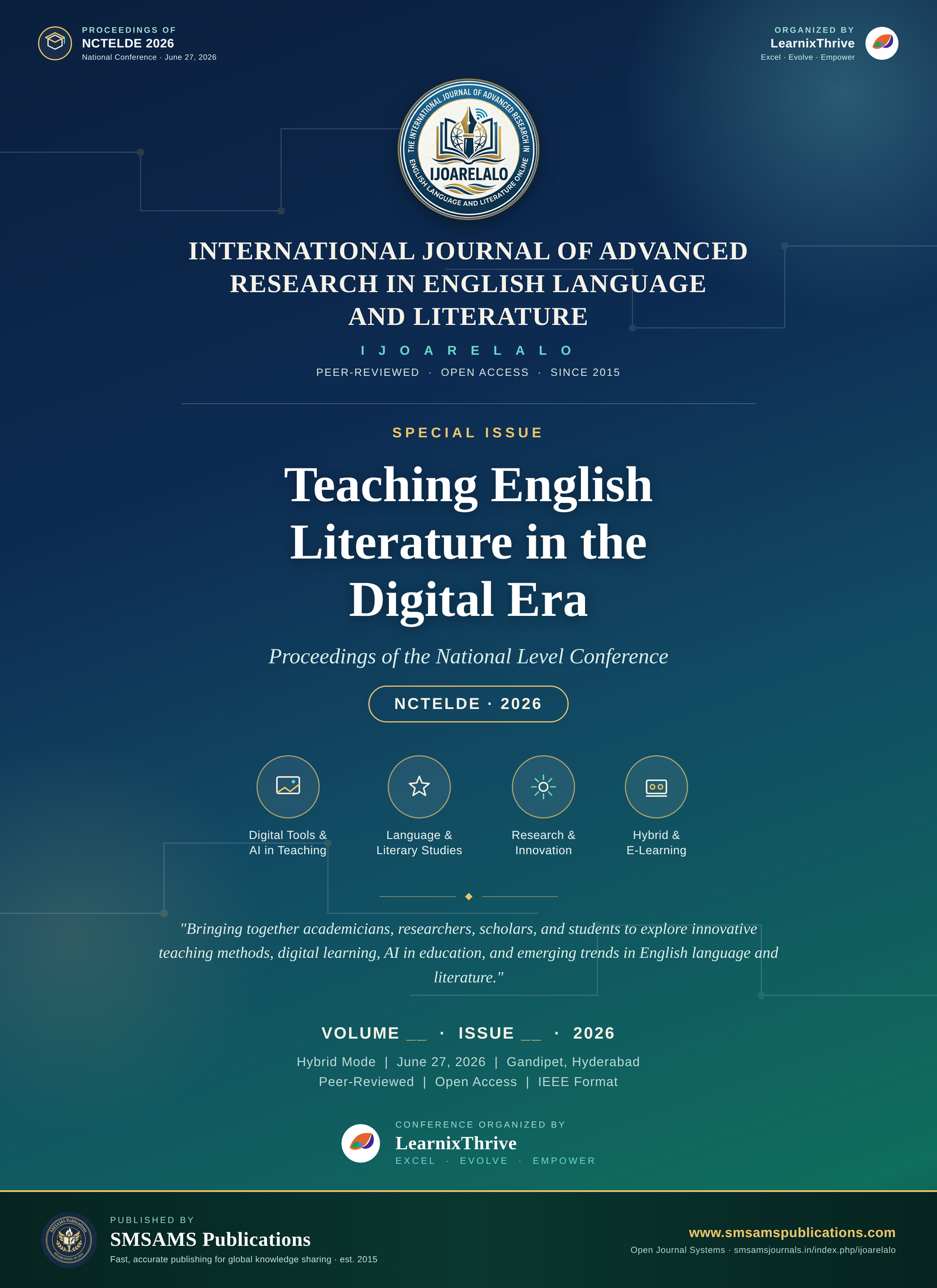
Future Trends in English Language Teaching and Learning: Virtual Learning, AI-Based Education, Innovative Teaching Practices and Emerging Educational Practices
Keywords:
nglish Language Learning,, Artificial Intelligence, Virtual Learning, Educational Technology, Personalized Learning, Innovative PedagogyAbstract
The twenty-first century has witnessed remarkable transformations in education due to technologicaladvancements and globalization. English language teaching and learning (ELT) has evolved from traditional teacher-centered classrooms to technology-driven, learner-centered environments. Virtual learning, Artificial Intelligence (AI)-based education, innovative pedagogical strategies, and emerging educational practices have significantly reshaped the methods of teaching and learning English. This paper explores the future trends in English language education and highlights the role of digital technologies in enhancing language acquisition, learner engagement, and personalized learning experiences. The study emphasizes the importance of integrating technological innovations with pedagogical practices to prepare learners for global communication and lifelong learning.
Downloads
Published
Versions
- 2026-08-18 (2)
- 2026-08-09 (1)
Issue
Section
Categories
License
Copyright (c) 2026 International Journal of Advanced Research in English Language and Literature Online (IJOARELALO)

This work is licensed under a Creative Commons Attribution 4.0 International License.
Short Text Block (Ideal for the Abstract Page / Article Sidebar)
Licensing & Open Access
This is an open-access article distributed under the terms of the Creative Commons Attribution 4.0 International License (CC BY 4.0).
Under this license, you are free to copy, distribute, transmit, and adapt the work, provided the original work is properly attributed. Copyright remains with the author(s).
Full Licensing Statement (Ideal for the PDF First-Page Footer or Dedicated "Licensing" Tab)
Copyright & Open Access License Notice
© 2026 The Author(s). Published by the International Journal of Advanced Research.
This text is an Open Access article distributed under the terms and conditions of the Creative Commons Attribution 4.0 International License (CC BY 4.0) (https://creativecommons.org/licenses/by/4.0/).
Permitted Uses under CC BY 4.0:
-
Share: You are permitted to copy and redistribute this material in any medium or format.
-
Adapt: You are free to remix, transform, and build upon the material for any purpose, even commercially.
Under the Following Conditions:
-
Attribution: You must give appropriate credit to the authors, provide a link to the license, and indicate if changes were made. You may do so in any reasonable manner, but not in any way that suggests the licensor endorses you or your use.
Implementation Checklist for Your Web Developer
To ensure search engines and indexers easily read these terms, make sure your layout handles the following:
-
Include the Official CC Logo: Place the small "CC BY" icon directly next to the statement on the webpage and PDF.
-
Hyperlink the License: Ensure the text "Creative Commons Attribution 4.0 International License" or "CC BY 4.0" links directly to the official Creative Commons site:
https://creativecommons.org/licenses/by/4.0/. -
Machine-Readable Metadata: If you are using Open Journal Systems (OJS), enable the Creative Commons plugin in the settings. This injects machine-readable code into your pages so that crawlers like Google Scholar and DOAJ instantly recognize your journal's open-access compliance.